The Environmental Group Limited

Menu
Designing Gas Turbine Silencers for Thermal Expansion, Reliability and Long-Term Performance
Modern power generation infrastructure is operating under increasingly dynamic conditions. Gas turbines are cycling more frequently, starting faster, and responding to changing energy demand with far greater variability than in the past.
Share This Story:
Table of Contents
This shift is being driven by the rapid growth of renewable energy. Unlike traditional baseload generation, renewable sources such as solar and wind are inherently intermittent—solar generation declines towards dusk and is off at night, and wind output can fluctuate unpredictably. As a result, gas turbines are no longer operating continuously over 24-hour periods. Instead, they now play a critical balancing role in the energy system, starting up quickly when renewable generation is insufficient.
In these scenarios, turbines are often required to reach operating temperature within minutes, introducing rapid increases in heat across critical components. These sharp thermal gradients are carefully managed by the choice of materials and thermal barrier coatings to prevent deformation of blades, rotors and structural steel, while maintaining operational reliability.
While much attention is placed on turbine performance itself, downstream exhaust infrastructure is experiencing many of the same operational pressures. This is especially true for gas turbine silencers, where repeated thermal cycling can introduce significant structural stresses over time.
For plant operators and engineers, one of the most common long-term challenges is not simply high temperature operation, it’s the continual expansion and contraction caused by fluctuating temperatures during start-up, shutdown and transient operating conditions.
Over time, these stresses can contribute to weld fatigue, distortion and cracking within exhaust silencer systems.
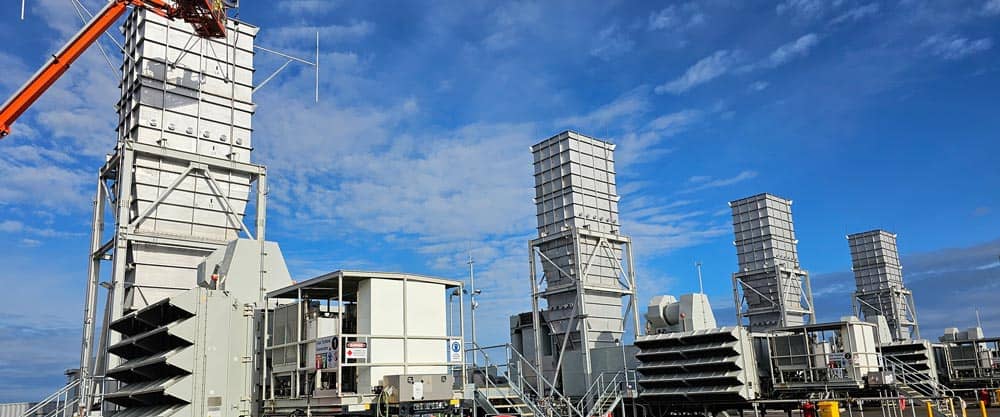
Why Thermal Cycling Creates Problems in Gas Turbine Silencers
Gas turbine silencers operate in extremely demanding environments. During operation, exhaust temperatures can increase rapidly before cooling again during shutdown or load reduction.
This constant movement creates repeated thermal expansion and contraction throughout the structure.
If a silencer system has not been properly engineered for these operating realities, stress concentrations can begin to form around:
- Welded joints
- Support connections
- Expansion interfaces
- Internal acoustic components
- Structural transitions
The result is often gradual fatigue accumulation over thousands of operating cycles.
Importantly, these issues rarely occur because of a single operating event. Instead, they develop progressively over time as thermal stresses continue to act on the structure.
The Shift Away from Steady-State Design Assumptions
Historically, many exhaust and silencer systems were designed around relatively stable operating conditions, where turbines ran continuously at steady load shutting down only a few times a year.
However, the energy landscape is changing rapidly.
Today’s power stations are increasingly required to:
- Cycle more frequently
- Operate under variable loads
- Respond to intermittent renewable generation
- Start and stop more rapidly
This means transient operating conditions are no longer the exception—they are now a core part of normal plant operation.
As a result, gas turbine silencer design must now account for far greater thermal variability than many legacy systems were originally intended to handle.
The engineering challenge is no longer simply designing for maximum temperature.
It is designing for continual temperature change over the full lifecycle of the plant.
Common Causes of Exhaust Silencer Weld Failure
Weld failures within gas turbine exhaust systems are often linked to a combination of thermal and mechanical factors. These may include:
- Inadequate expansion management
- Poor load distribution
- Rigid structural transitions
- High localised stress concentrations
- Fatigue from repeated thermal cycling
- Material incompatibility
- Inferior joining methodologies
In many cases, cracking begins in highly stressed weld zones where thermal movement has not been sufficiently accommodated in the original design.
Without proper engineering consideration, even small cyclic movements can accumulate into significant long-term structural damage.
How Better Gas Turbine Silencer Design Improves Reliability
Effective gas turbine silencer design requires more than acoustic performance alone. Long-term reliability depends on how the entire structure manages thermal and mechanical movement over time.
This includes careful consideration of:
- Structural flexibility
- Thermal expansion pathways
- Load management
- Material selection
- Weld detailing
- Fatigue resistance
- Acoustic performance under variable conditions
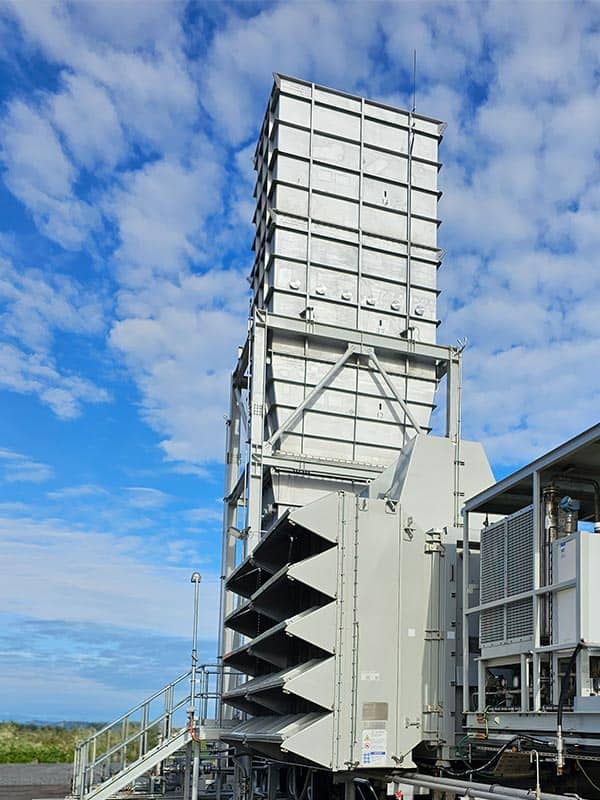
At EGL Baltec, part of The Environmental Group, our engineering approach combines acoustic modelling, thermal analysis and structural design to develop integrated exhaust silencer systems engineered for real-world operating conditions.
By understanding how thermal cycling impacts the full structure over years of operation, systems can be designed to better withstand changing operating demands while maintaining long-term integrity.
Reliability and Sustainability Go Hand in Hand
Premature infrastructure failure does not only impact maintenance costs and operational continuity. It can also contribute to:
- Increased material consumption
- Additional fabrication requirements
- Unplanned outages
- Higher lifecycle emissions
- Reduced operational efficiency
That is why designing durable exhaust and silencer systems is increasingly recognised as part of broader infrastructure sustainability.
Reliable systems reduce the need for repeated repair and replacement while supporting more stable long-term plant performance.
As power generation infrastructure continues evolving to support a more flexible, renewable-driven energy landscape, durability under changing operating conditions is becoming just as important as output itself.
Engineering for Long-Term Performance
The future of power generation will continue placing greater demands on exhaust and downstream infrastructure.
For operators, EPCs and asset owners, this creates an important engineering question:
Is your gas turbine silencer system designed for steady-state operation alone — or for the realities of modern cycling power generation?
At EGL Baltec, part of The Environmental Group, we design and supply gas turbine exhaust and silencer systems engineered to manage thermal cycling, structural stresses and long-term operational reliability in demanding environments.
Because long-term performance is not defined by how systems operate at full load on day one. It is determined by how they perform through years of changing operating conditions.
Related Articles
Modern power generation infrastructure is operating under increasingly dynamic conditions. Gas turbines are cycling more frequently, starting faster, and responding to changing energy demand with far greater variability than in the past.
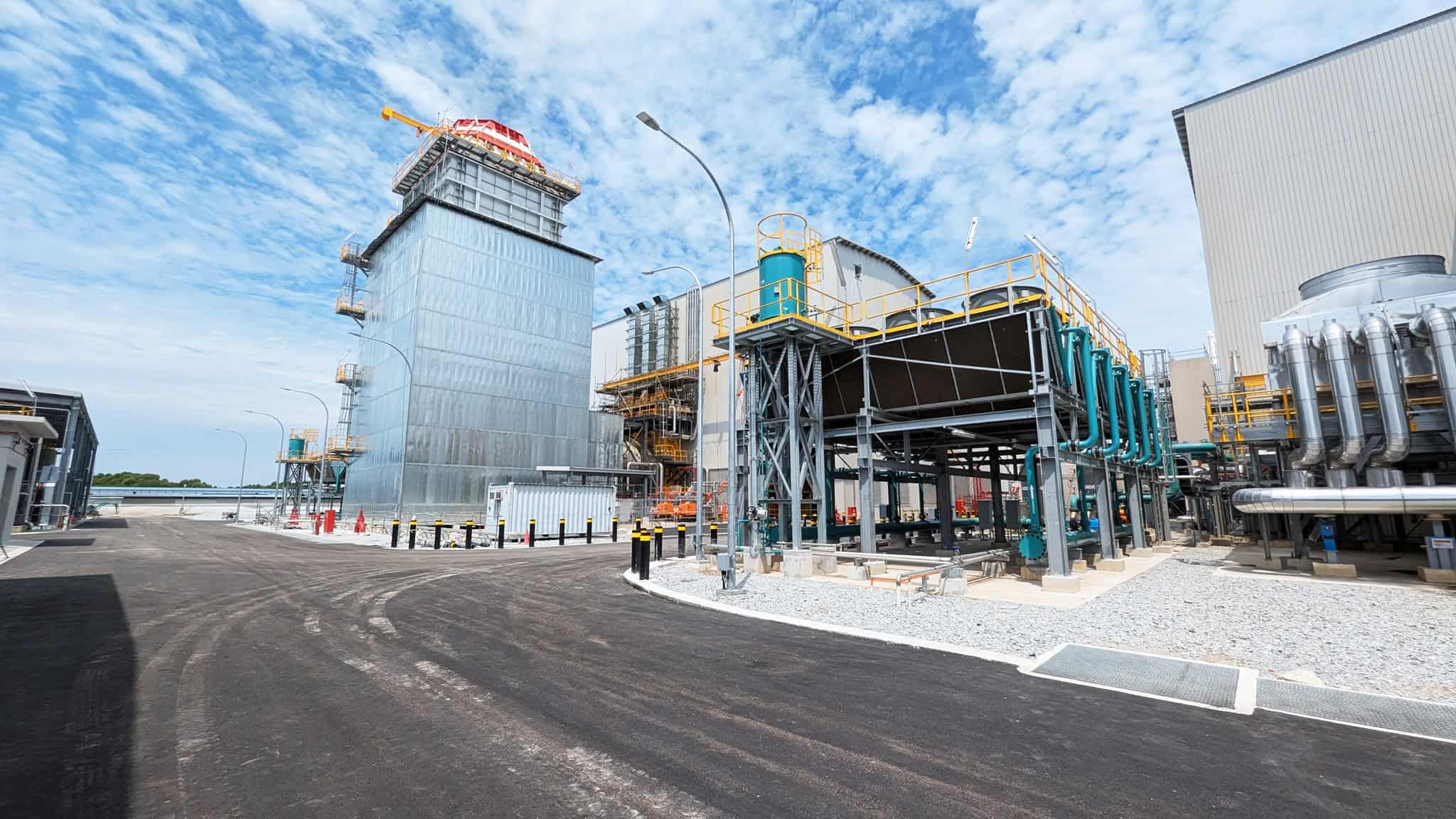
Advanced Gas Turbine Exhaust Systems – Enabling Reliable, Low-Emission Energy in Southeast Asia
Discover how EGL Baltec’s Gas Turbine Exhaust Systems are powering low-emission, hydrogen-ready energy across Southeast Asia.
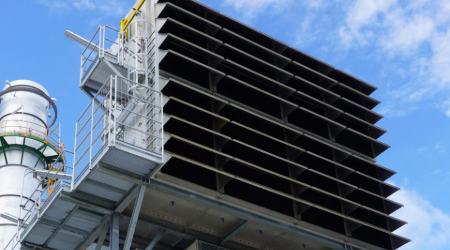
Australian Energy Market
An ambitious project developed by Bluescope that involved the installation of a large regenerable activated carbon filter to clean the gases exiting from the ESP, before they reach the stack for final discharge.
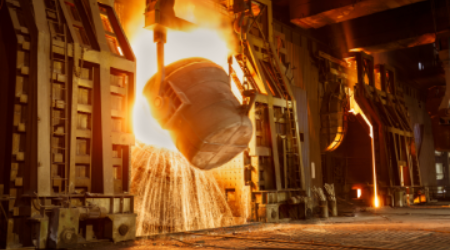
Bluescope Steel – Sinter Plant Waste Gas Cleaning Plant Bypass
An ambitious project developed by Bluescope that involved the installation of a large regenerable activated carbon filter to clean the gases exiting from the ESP, before they reach the stack for final discharge.
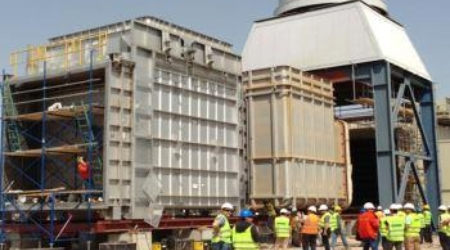
Multi-million-dollar contract in South East Asia
Design, supply and install of a diverter damper exhaust system for a project in Indonesia.