The Environmental Group Limited

Menu
Powering the AI Era: Engineering Gas Turbine Infrastructure for Data Centres
As artificial intelligence and data centre development drives unprecedented demand for reliable power, the gas turbine market is responding with larger projects, growing order backlogs and new generation capacity. Supporting these turbines requires complex inlet, exhaust, acoustic and bypass infrastructure engineered for demanding operating conditions. In this article, we explore how data centre growth is shaping the gas turbine market. We’ll explore the engineering challenges created by larger and more flexible turbines, and how EGL Baltec is developing gas turbine inlet and exhaust systems to support the next generation of power projects.
Share This Story:
Table of Contents
The rapid growth of artificial intelligence and data centres is having a significant impact on the power generation market, particularly in the United States.
Data centres require large amounts of reliable power and, as the scale and number of facilities increase, securing sufficient generation capacity is becoming a major consideration for developers.
We are already seeing the effect this is having on the gas turbine market. Demand in the US is at very high levels, with turbine OEMs experiencing significant order backlogs and turbines being redirected from other global markets to meet US demand. Some OEMs are also bringing older turbine models back into production as available manufacturing capacity becomes increasingly constrained.
For companies working in gas turbine engineering, this creates demand not only for the turbines themselves, but for all the equipment required around them.
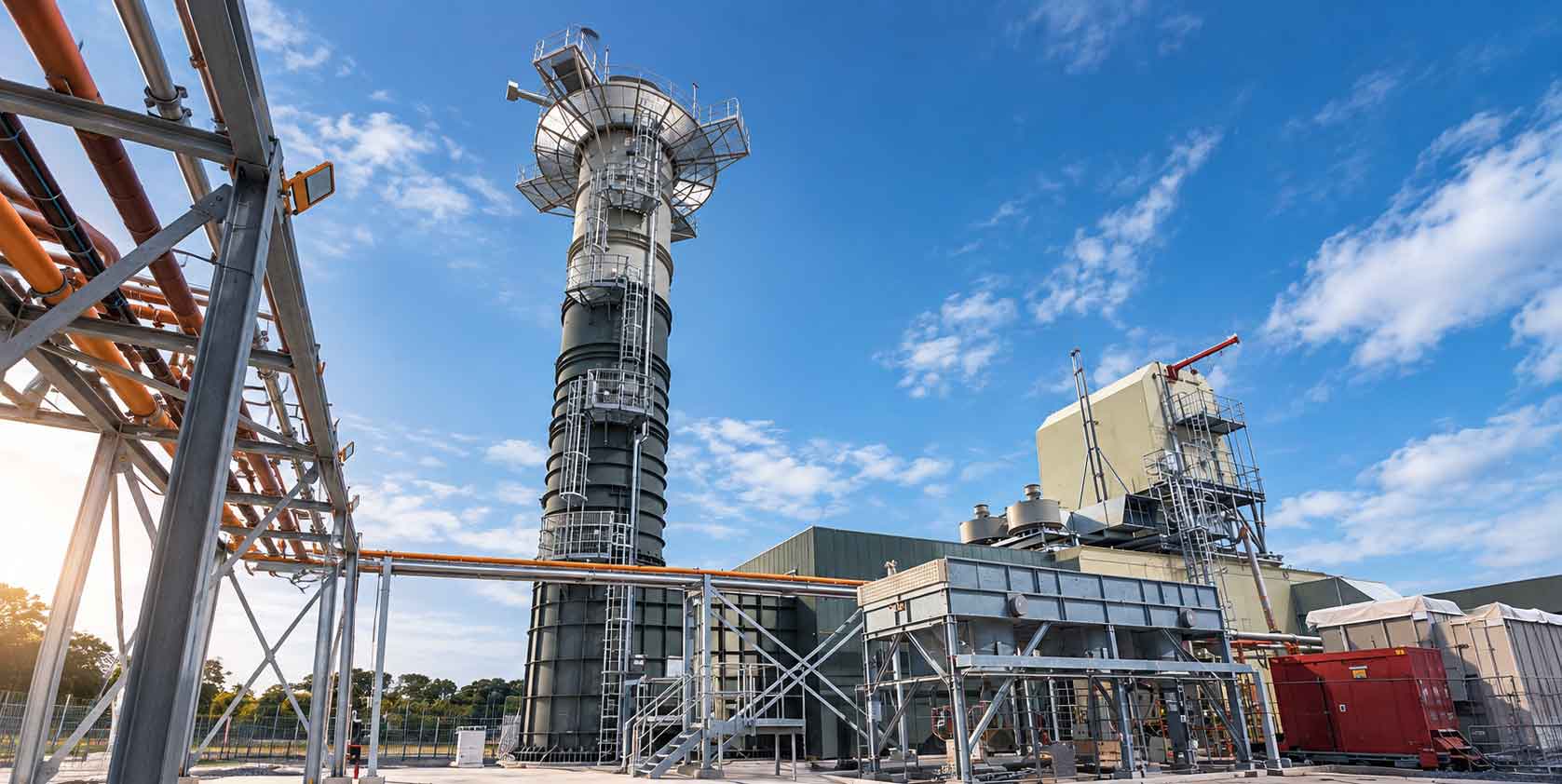
The challenge of powering data centres
One of the main challenges with data centre development is the amount of power required and the time it can take to bring new grid infrastructure online.
A large data centre operates continuously. Servers, cooling equipment and supporting systems all require reliable electricity, and interruptions can have significant consequences.
In some locations, the existing grid simply does not have sufficient capacity available for the scale of development being proposed. New transmission and generation infrastructure can also take years to plan and construct.
For this reason, developers are looking at a range of generation options, including dedicated gas turbine generation.
Gas turbines have some useful characteristics for these applications. They can provide large amounts of dispatchable power, respond to changing loads and operate independently or as part of a broader power system incorporating grid supply, renewables and energy storage.
There is a lot more around a turbine than the turbine itself
When people talk about new gas generation, most of the attention naturally goes to the gas turbine. From an engineering perspective, however, there is a considerable amount of equipment required around it.
On the inlet side, air needs to be filtered and delivered to the turbine with the correct flow characteristics and minimal unnecessary pressure loss.
On the exhaust side, very large volumes of high-temperature gas need to be managed through ductwork, silencers, dampers, expansion joints and stacks.
The size of these systems can be substantial, particularly as turbine capacities increase. Every project also has its own requirements around noise, pressure loss, structural loads, thermal expansion, transport, installation and site layout.
These are all areas EGL Baltec has worked in for many years.
Our gas turbine inlet and exhaust systems include inlet filter houses, inlet and exhaust silencers, diverter dampers, bypass exhaust systems, diffuser ducts, expansion joints and exhaust stacks.
The challenge is making all of those components work together as one system.
Larger turbines create different engineering challenges
One trend we are watching closely is the move towards larger gas turbines.
As turbine output increases, so does the scale of the supporting infrastructure. Exhaust gas volumes increase, ducts and dampers become larger and structural and thermal loads become more significant.
It is not simply a case of making an existing design bigger.
Airflow distribution, pressure loss, acoustic performance, thermal movement and structural behaviour all need to be considered for the specific turbine and operating conditions.
EGL Baltec is currently developing additional products for this changing market, allocated to product development and R&D over the coming year.
The aim is to make sure our product range continues to meet the requirements of the larger turbine technologies now being specified for new generation projects.
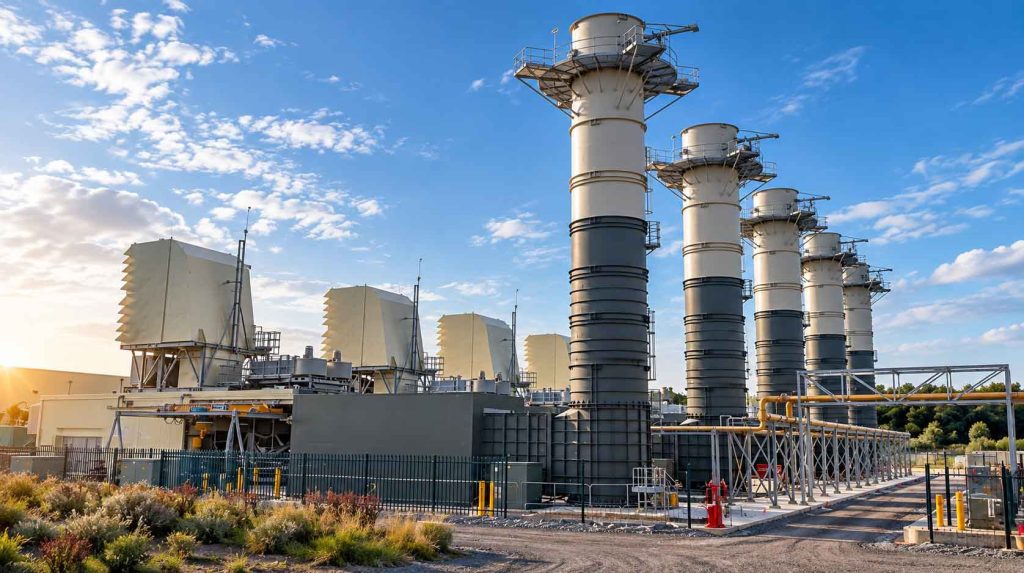
Engineering before fabrication
A significant amount of the work on these systems happens well before fabrication starts.
We use Computational Fluid Dynamics (CFD) to assess airflow, velocity distribution and pressure losses through inlet and exhaust systems.
Finite Element Analysis (FEA) and structural modelling are used to assess how equipment will respond to operating loads as well as external conditions such as wind and seismic loads.
Thermal analysis is particularly important on the exhaust side.
Components operating at high temperatures expand considerably, and systems need to accommodate that movement without creating excessive loads elsewhere in the plant. This becomes even more important where turbines are regularly starting, stopping or changing load.
Acoustic modelling is another major part of the design process. Gas turbines generate significant noise and silencers need to achieve the required attenuation without introducing excessive pressure loss into the system.
Being able to model these conditions before fabrication allows us to identify potential issues and refine the design before equipment reaches site.
Designing for fabrication and installation
The design also has to work outside the engineering model.
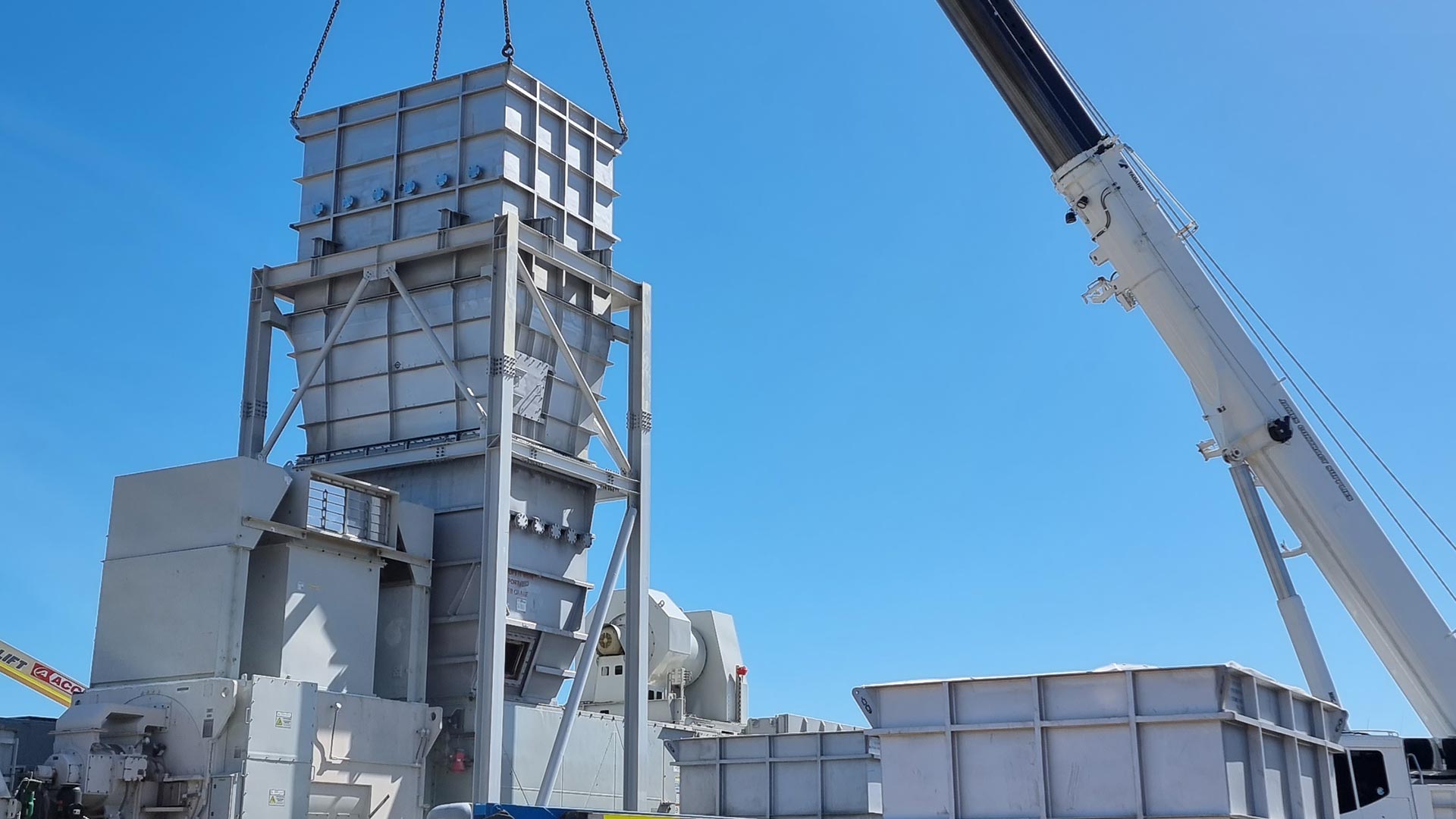
Many of the inlet and exhaust systems associated with large gas turbines are substantial fabricated structures. How they are broken into modules can affect fabrication, transport, lifting and installation.
A design that performs well technically but is difficult to transport or assemble on site is not necessarily a good design.
Transport dimensions, crane access, shipping constraints, connection locations and installation sequences therefore need to be considered during the engineering process.
This is particularly relevant for projects with compressed delivery schedules, which we expect to become increasingly common as developers compete to bring new data centre capacity online.
Gas turbines and renewable generation
The data centre market is not the only factor changing how gas turbines are being used.
As more renewable generation is added to electricity networks, gas turbines are increasingly being required to operate flexibly to support variations in renewable output and electricity demand.
A turbine that previously operated for long periods at relatively stable loads may now be required to start, stop and change load more frequently.
That creates a different operating environment for the equipment around the turbine.
Repeated heating and cooling introduces greater thermal cycling, which affects exhaust ducting, expansion joints, dampers, silencers and supporting structures.
EGL Baltec has been developing a new generation of silencers and diverter dampers specifically for turbines operating in these more dynamic conditions.
Our engineering team has developed silencer designs capable of achieving the required noise attenuation while accommodating the thermal conditions associated with peaking operation.
This work is becoming increasingly relevant as gas turbines are used both to support renewable generation and to provide reliable power for large new electricity loads.
Expanding EGL Baltec's presence in the US
The changes occurring in the US power generation market represent a significant opportunity for EGL Baltec.
We have established an agency agreement and local representation in the Midwest, where a large amount of Engineering, Procurement and Construction activity is based.
Having people on the ground gives us better access to customers and projects and makes it easier to work with EPC contractors, OEMs and developers during the early stages of project development.
We are currently tendering several gas turbine bypass systems for projects in the United States and expect this market to remain an important area of focus for the business.
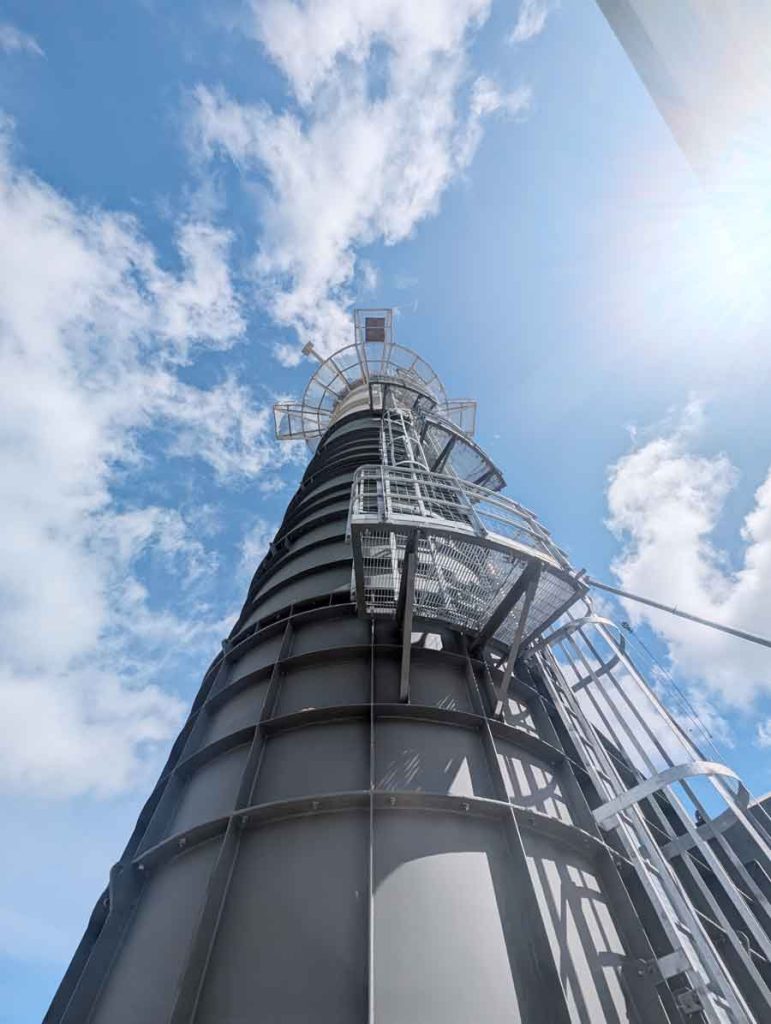
Engineering for a changing power market
There is still a lot of uncertainty around exactly how the power requirements of AI and data centres will ultimately be met. It will almost certainly involve a mix of technologies including grid generation, renewables, storage and dispatchable generation.
What is already clear is that considerably more generation infrastructure will be required.
For gas turbine projects, that means engineering the complete system properly — from the air entering the turbine through to the exhaust leaving the stack.
EGL Baltec has decades of experience designing and delivering gas turbine inlet and exhaust systems for projects around the world. As the US market grows, we are applying that experience to the next generation of power projects supporting data centres, renewable energy and changing electricity demand.
If you are developing a gas turbine project and would like to discuss inlet, exhaust, acoustic or bypass system requirements, contact the EGL Baltec team to discuss your project.
Related Articles
Modern power generation infrastructure is operating under increasingly dynamic conditions. Gas turbines are cycling more frequently, starting faster, and responding to changing energy demand with far greater variability than in the past.
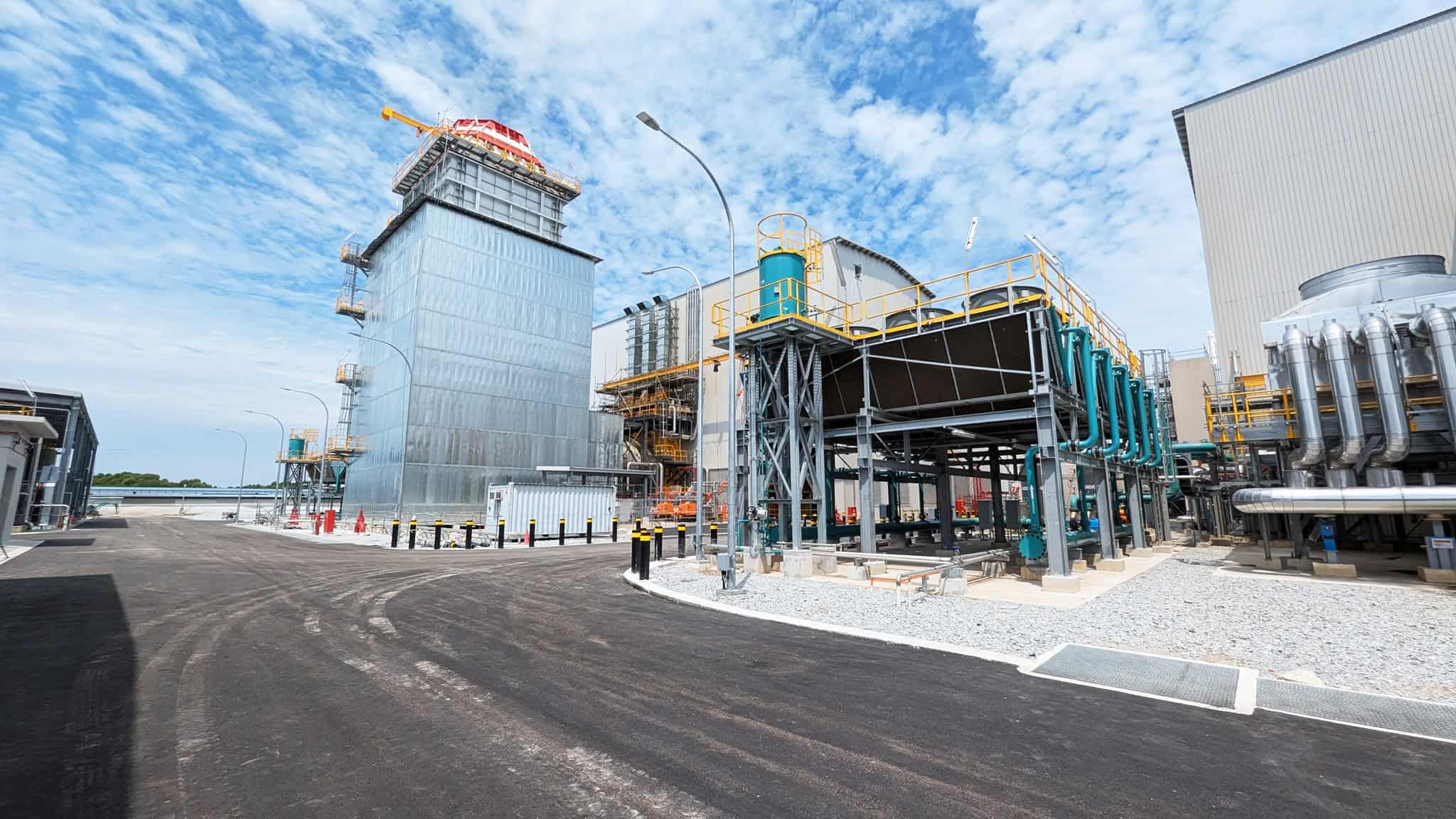
Advanced Gas Turbine Exhaust Systems – Enabling Reliable, Low-Emission Energy in Southeast Asia
Discover how EGL Baltec’s Gas Turbine Exhaust Systems are powering low-emission, hydrogen-ready energy across Southeast Asia.
Australian Energy Market
An ambitious project developed by Bluescope that involved the installation of a large regenerable activated carbon filter to clean the gases exiting from the ESP, before they reach the stack for final discharge.
Bluescope Steel – Sinter Plant Waste Gas Cleaning Plant Bypass
An ambitious project developed by Bluescope that involved the installation of a large regenerable activated carbon filter to clean the gases exiting from the ESP, before they reach the stack for final discharge.
Multi-million-dollar contract in South East Asia
Design, supply and install of a diverter damper exhaust system for a project in Indonesia.